
Introduction: The Need for Interoperability in the AECO Industry
Across the Architecture, Engineering, Construction, and Operations (AECO) sector, digital delivery has become the norm—but true interoperability remains a challenge. While Building Information Modelling (BIM) tools are widely adopted, many projects still suffer from fragmented data, inconsistent information requirements, and software-dependent workflows.
These issues are not theoretical. They directly affect coordination quality, design certainty, approval timelines, and downstream asset usability. Global project teams increasingly recognise that tools alone do not guarantee reliable digital outcomes. What matters is how information is structured, exchanged, validated, and trusted.
This is where openBIM standards play a critical role. By relying on internationally recognised, vendor-neutral standards developed through industry consensus, openBIM provides a foundation for consistent, transparent, and future-proof digital project delivery.
At Yatzar Academy, our work with professionals and organisations across the AECO ecosystem has consistently shown that projects grounded in openBIM principles achieve higher data reliability, clearer collaboration, and stronger long-term value.
What Is openBIM?
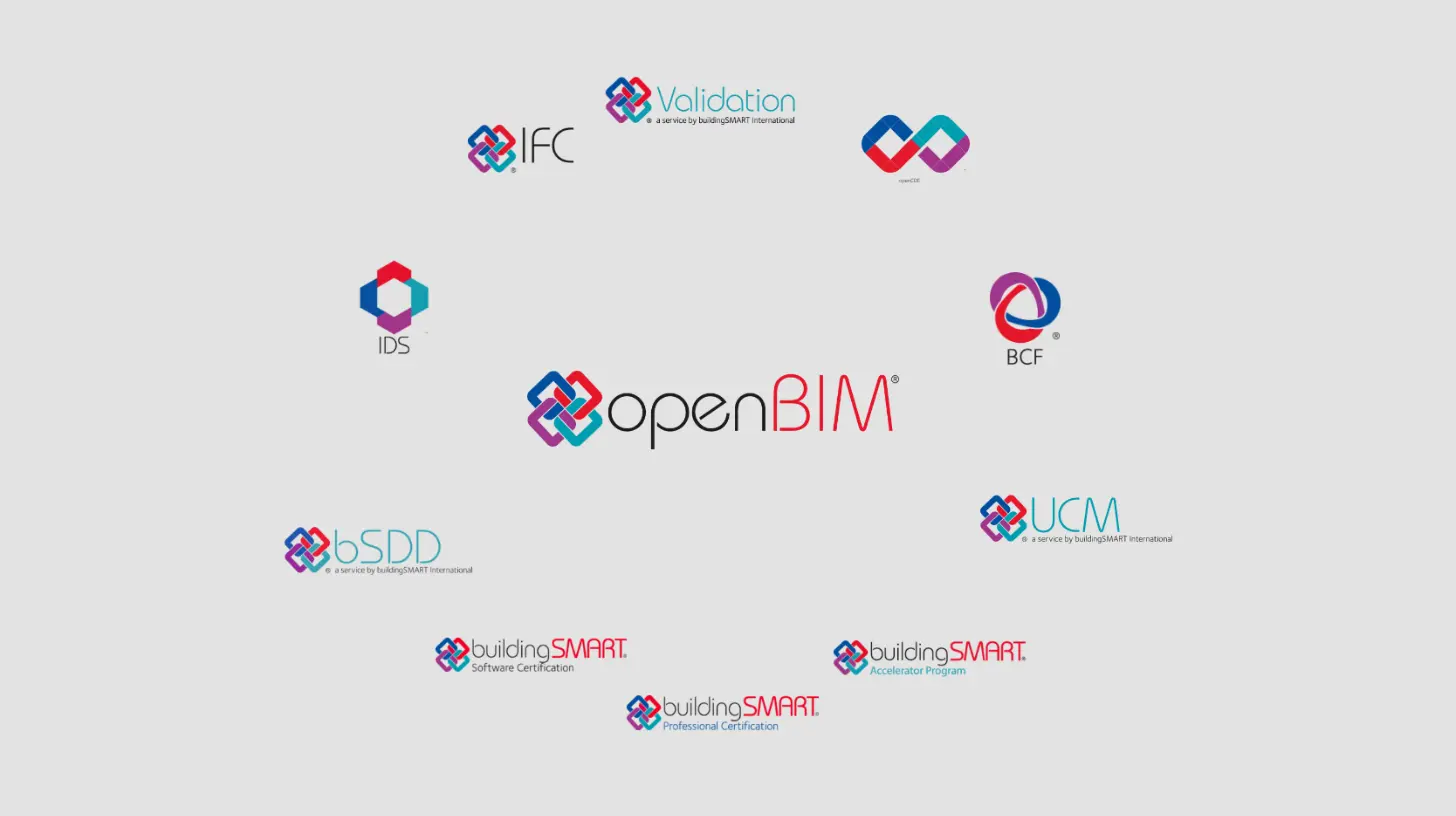
openBIM is a collaborative framework promoted by buildingSMART International that supports open, vendor-neutral workflows for BIM-based projects. Its primary objective is to ensure that digital building information can be exchanged, validated, and reused throughout the asset lifecycle—independent of specific software platforms.
Unlike proprietary BIM workflows, which often lock data within individual tools, openBIM is built on open standards, open workflows, and open collaboration principles. This allows project participants to work in their preferred software environments while still contributing to a shared, interoperable data ecosystem.
Key characteristics of openBIM include:
- Neutral data formats
- Clear information requirements
- Machine-readable validation rules
- Transparent collaboration across disciplines
Industry Foundation Classes (IFC): The Backbone of openBIM
At the core of openBIM lies the Industry Foundation Classes (IFC) standard. IFC is an ISO-certified data model (ISO 16739) designed to represent both geometric and non-geometric building information in a structured, software-independent format.
IFC enables:
- Reliable exchange of models between different BIM tools
- Preservation of object data, relationships, and properties
- Long-term accessibility of project information beyond software lifecycles
By using IFC, project teams can reduce information loss during file exchanges and ensure that models remain usable throughout design, coordination, and documentation stages.
Beyond Geometry: The openBIM Standards Ecosystem
While IFC provides the structural foundation, effective interoperability requires more than just model exchange. openBIM is supported by a broader ecosystem of complementary standards and services that address semantics, information requirements, and collaboration workflows.
buildingSMART Data Dictionary (bSDD)
The buildingSMART Data Dictionary (bSDD) provides a shared, multilingual library of concepts, classifications, and properties. It ensures that different stakeholders interpret object data consistently—regardless of language, region, or discipline.
By aligning terminology and property definitions, bSDD helps eliminate ambiguity and improves semantic consistency across digital models.
Information Delivery Manual (IDM)
The Information Delivery Manual (IDM) focuses on defining who needs what information, when, and for what purpose. It maps information exchanges between project participants and supports the creation of structured digital workflows.
IDM helps organisations:
- Clarify roles and responsibilities
- Define information milestones
- Align digital deliverables with project processes
Information Delivery Specification (IDS)
The Information Delivery Specification (IDS) translates information requirements into machine-readable rules. Instead of relying on manual checks, IDS allows automated validation of BIM models to ensure that required data is present, structured correctly, and compliant with project standards.
IDS plays a critical role in improving data quality and reducing downstream coordination issues.
BIM Collaboration Format (BCF)
The BIM Collaboration Format (BCF) supports structured issue tracking and communication without exchanging entire models. By separating coordination comments from model files, BCF enables efficient collaboration across platforms while maintaining clear audit trails.
Use Case Management (UCM)
Use Case Management (UCM) provides a systematic way to document and standardise recurring digital workflows. It helps organisations adopt openBIM consistently by aligning technical standards with real project scenarios.
Benefits of openBIM for Digital Project Delivery
When implemented correctly, openBIM delivers tangible benefits across the project lifecycle:
- Improved interoperability between software platforms
- Higher data quality through standardised information requirements
- Reduced rework caused by miscommunication or data loss
- Greater transparency in collaboration and decision-making
- Long-term data usability for asset management and future projects
These benefits make openBIM particularly valuable for projects involving multiple stakeholders, international teams, or long asset lifecycles.
Challenges in Adopting openBIM
Despite its advantages, openBIM adoption is not without challenges. Standards such as IFC and IDS can be technically complex, and not all software tools offer full or consistent support. Successful implementation also requires organisational readiness, process alignment, and a clear understanding of information requirements.
This highlights the importance of education and structured learning in enabling professionals to move beyond tool-based BIM toward standards-driven digital workflows.
Building openBIM Capability Through Structured Learning
As digital projects become increasingly data-centric, understanding openBIM standards is no longer optional. Professionals who can define information requirements, validate models, and manage interoperable workflows are better equipped to contribute to modern project environments.
At Yatzar Academy, we focus on developing this capability by bridging theory and practice—helping learners understand not just what openBIM standards are, but why they matter and how they are applied in real projects.
Conclusion
openBIM represents a shift away from isolated, software-dependent workflows toward a more open, verifiable, and resilient approach to digital project delivery. By adopting standards such as IFC, IDS, bSDD, IDM, and BCF, organisations can improve interoperability, strengthen data quality, and enable meaningful collaboration across disciplines and tools.
As digital delivery expectations continue to rise globally, understanding openBIM is no longer optional. It is a core competency for professionals involved in design coordination, information management, and standards-driven project execution.
Building openBIM Capability with Yatzar Academy
At Yatzar Academy, we focus on helping professionals move beyond tool-based BIM toward standards-led digital practice.
For professionals looking to formalise their understanding and gain global recognition, we offer structured learning aligned with the buildingSMART Professional Certification – Foundation, delivered as an authorised training provider.
This certification supports:
- Clear understanding of openBIM principles and standards
- Confidence in interoperable, multi-tool project environments
- Alignment with globally recognised digital delivery practices
If you are looking to strengthen your capability in standards-driven digital projects, explore our upcoming certification programs and learning pathways.
📩 Have questions? Reach out to us at reachus@yatzaracademy.com