
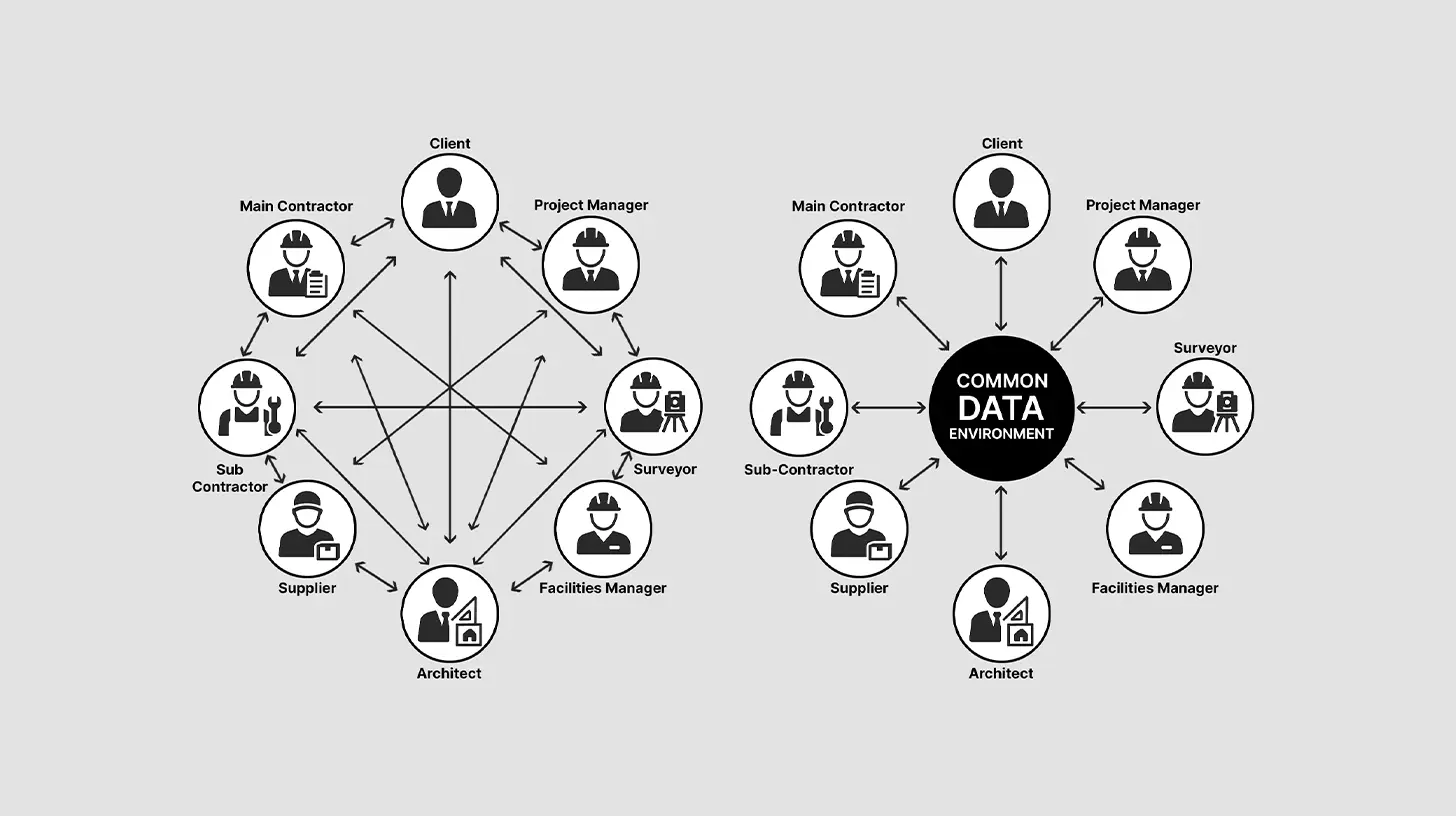
The construction and design industry stands at a critical turning point in its digital transformation journey. Two approaches – proprietary BIM systems and openBIM – define how professionals collaborate, share, and sustain project data. Yet, while proprietary formats once seemed convenient, they are now limiting progress, interoperability, and long-term value for projects worldwide.
Understanding openBIM
OpenBIM is an open, collaborative methodology that promotes interoperability across multiple software platforms. It is supported by buildingSMART International, which governs open standards such as IFC (Industry Foundation Classes), BCF (BIM Collaboration Format), and IDS (Information Delivery Specification). Unlike proprietary systems that lock users into closed ecosystems, openBIM enables every stakeholder to use the software of their choice while maintaining smooth, accurate data exchange.
Key principles of openBIM include:
- Interoperability across tools and platforms.
- Ownership and long-term accessibility of project data.
- Transparency through open and neutral file standards.
- Freedom of workflow choice without software dependency.
The Downside of Proprietary Formats
Proprietary BIM tools – such as those using closed file formats – limit workflows to specific software vendors. Once a project begins in one ecosystem, data becomes difficult to share or reuse without conversion risks. This leads to data silos, where information cannot move freely between disciplines. Other drawbacks include:
- Dependence on vendor updates and pricing structures.
- Difficulty accessing older data if licenses expire or software versioning changes.
- Reduced collaboration, especially when contractors or clients use different systems.
- Risk of losing project information integrity during conversions.
How Proprietary Systems Hold Projects Back
Closed BIM systems appear seamless for teams using identical software, but they isolate information from the broader project ecosystem. When engineers, architects, and facility managers cannot access common data structures, inefficiency grows.
This often results in:
- Extra time and cost spent managing incompatible models.
- Miscommunication and rework due to inconsistent data.
- Limited flexibility when integrating tools like energy analysis, scheduling, or cost estimation software.
Why openBIM Is the Future
By embracing openBIM, the industry benefits from vendor-neutral collaboration, long-term data ownership, and future-proof workflows. Its principles foster innovation, competition, and efficiency because project data can move freely without dependence on specific software vendors. OpenBIM ensures that digital assets remain accessible, auditable, and usable even decades after construction.
Final Thoughts
Proprietary BIM ecosystems force architecture, engineering, and construction professionals into closed silos, limiting innovation and sustainability. OpenBIM breaks those barriers – enabling teams to collaborate, innovate, and manage building data openly and transparently for generations to come.
Get certified in openBIM through the buildingSMART Professional Certification program – offered by Yatzar Academy, the official provider of buildingSMART International Professional Certification.
Click here to Register
https://yatzaracademy.com/courses/buildingsmart-professional-certification-foundation/